Word Tower - Premium Puzzle
- 4.7
- Rating
- 10.00K
- Installs
- $2.99
- Price
 Analysis by App-foxy
I went into Word Tower - Premium Puzzle expecting a straightforward word game, but its appeal is more thoughtful than that. It is a vocabulary-and-pattern puzzle from otto games, built around a large collection of levels and a simple idea: keep finding the right words while the challenge gradually asks more from your attention. I like that it can fit into a short break, yet it also gives me enough progression to make returning worthwhile.
This is not the kind of game I would recommend because of flashy presentation or competitive spectacle. I would recommend it to someone who enjoys pausing over letters, testing possibilities, and feeling a small sense of achievement after solving a stubborn board. The important question is whether that style suits you, especially when the game costs $2.99 and also lists optional in-app items priced from $0.99 to $6.99 per item.
How the puzzle feels in everyday play
The core experience is easy to understand, which is one of its strongest qualities. I can open it when I have a few spare minutes, focus on the current word challenge, and stop without needing to remember a complicated story or control system. That makes it a natural companion for a commute, a waiting room, or the quiet part of an evening when I want something more active than scrolling but less demanding than a full game.
You May Also Like

 Blood Strike: 2.5 Anniversary
Blood Strike’s Loadouts Turn Every Drop Into a Tactical Gamble
A close look at Blood Strike’s custom loadouts: how fast access to signature weapons reshapes its battle royale rhythm, rewards preparation, and narrows the gap between fights.

 Pandora - Music & Podcasts
Pandora’s Music Is Easy to Start, but Harder to Recover
Pandora’s strength is its low-effort path from a seed to a station. Its weak spot is how much confidence it asks you to place in connection, setup, and quiet recovery.

 8 Ball Pool
 Is Built on Rivalries, Rematches, and Routine
A close look at the rivalries, rematches, shared routines, and unanswered safety questions that turn a quick pool match into a persistent mobile community.

 Samsung Music
’s Quiet Strength Is Playing What You Already Own
Its reach comes less from spectacle than from dependable access to a personal library. That simplicity is both the app’s strongest retention engine and its ceiling.

 AccuWeather: Weather Radar
AccuWeather Review: A Quick, Clear Forecast for Everyday Decisions
For everyday plans, the best forecast is the one you can understand quickly. AccuWeather makes rain timing, radar, and local conditions easy to act on, with a few trade-offs.

 Hill Climb Racing
Why Hill Climb Racing Still Turns Crashes Into One More Run
A tiny car, a bumpy hill and one more upgrade: Hill Climb Racing keeps resurfacing because its simple chaos makes every near-miss feel personal.
More From Our News Desk
View All News


The level count gives the game a clear sense of purpose. There are more than 1000 levels, so the attraction is not simply solving one clever puzzle and moving on. The real hook is the rhythm of gradual progress: solve a board, learn how the game wants me to think, then meet a new arrangement that tests whether I have become too comfortable with my usual approach.
I found that the best sessions were not necessarily the longest ones. Word puzzles can become tiring when I keep forcing the same idea, and this game benefits from being played in small bursts. If I get stuck, putting the phone down for a few minutes often feels more useful than repeatedly tapping at the same letters. A fresh look can reveal a word that was visible all along.
That also makes it suitable for different skill levels. A confident word-game player may enjoy moving quickly through familiar patterns, while a casual player can treat each solved level as a small mental exercise. I would not describe it as a language-learning course, though. It can encourage vocabulary awareness and spelling attention, but its main purpose is entertainment rather than structured instruction.
Progress without turning every session into a race
The progression is most enjoyable when I treat it as a personal challenge rather than a test of speed. I do not need to be the fastest person in the room to get value from it. The game works better for players who like considering several possibilities and accepting that some levels will take longer than others.
One useful habit is to avoid committing to the first partial word that appears in my head. I scan the available letters, look for common endings and beginnings, and then check whether the remaining letters suggest another solution. This sounds basic, but it changes the experience from random guessing into a repeatable solving method. It is also a good way to make the later levels feel less intimidating.
Another practical tip is to use a mental reset instead of escalating frustration. When I have spent too long on one board, I stop looking at it as a single impossible problem. I identify what I already know, separate certain letters from uncertain ones, and rebuild the possibilities from there. That approach is especially helpful for players who tend to tap quickly and then blame the game when the answer does not appear.
The downside is that a large level library can create pressure of its own. Seeing a long road ahead may motivate completion-focused players, but it can also make the game feel like a task. I would skip it if I need a tightly authored story, a definite ending, or constant novelty from one minute to the next. Its pleasure comes from repetition with variation, not from dramatic events.
What spending changes, and what it does not answer
The purchase setup deserves attention before anyone downloads it. The game is listed at $2.99, while optional in-app purchases range from $0.99 to $6.99 per item. That means the cost is not as simple as assuming the initial payment is the only possible expense. I would decide in advance whether I am comfortable ignoring the optional items, because that makes the spending boundary clear from the beginning.
I appreciate having the price visible before committing, but I would still approach the purchase with a specific expectation: I am paying for access to a word-puzzle experience, not buying a guarantee that every level will suit my vocabulary or preferred difficulty. The optional items may matter to some players, yet I would not build my decision around them unless I already know I want extra assistance or another form of convenience.
My advice is to play with a personal rule. I would first try to solve each level unaided, then reserve any optional help for a genuine dead end rather than using it automatically. This preserves the satisfaction of discovery and prevents a difficult board from becoming an invitation to spend. It also makes it easier to judge whether the underlying puzzle design is enjoyable on its own.
For families, the content rating is Everyone, which makes the game broadly approachable from an age-rating perspective. Still, an Everyone rating does not answer every practical question a parent may have about spending. If a child uses the device, I would check the device’s purchase controls and make sure the payment settings match the household rules. That is a sensible precaution whenever optional items appear in a game.
Fairness when there is no need to prove anything
Word games are often at their fairest when the player can focus on reasoning rather than comparison. This title appeals to me because its main challenge is internal: can I recognize the pattern, manage the available letters, and stay patient? I do not need a leaderboard or a public rank to make a solved level feel worthwhile.
That said, players who want a strong competitive layer should be cautious about choosing it for that reason alone. The information presented with the game establishes its word-puzzle identity and its large level collection, but it does not give me a basis for promising tournaments, ranked play, or head-to-head competition. I would choose a dedicated multiplayer word game instead if beating other people is the main reason I play.
The same distinction matters for spending. A fair personal approach is to treat optional purchases as convenience rather than as part of the skill test. If I use help on a board, I no longer get exactly the same satisfaction as solving it unaided, so I prefer to keep assistance as a last resort. Players who enjoy optimizing every advantage may feel differently, but the game is most rewarding for me when the answer comes from my own reasoning.
There is also a social use case that does not require formal competition. I can hand a tricky puzzle to a friend, compare possible words, and discuss why one solution fits better than another. That turns a solitary phone game into a small conversation starter. It is particularly nice for people who enjoy wordplay but do not want the pressure of a timed contest.
How it compares with familiar word-game alternatives
Compared with a daily word puzzle, this game offers a broader ongoing path instead of making the player wait for one new challenge. That is useful when I want to play several rounds in one sitting. The trade-off is that a daily format often creates a stronger shared ritual, while a large level-based game can feel more private and less connected to a particular day.
Compared with a crossword, the experience is likely to feel more focused on manipulating words and recognizing patterns than on using clues across a wide grid. I would choose a crossword when I want general knowledge, clue interpretation, and a more expansive puzzle structure. I would choose Word Tower when I want a cleaner word task that I can pick up without preparing for a long session.
Compared with a free word game supported by advertising, the $2.99 price changes the initial decision. Some players prefer trying a free download before paying anything, while others would rather avoid an ad-centered experience if a paid option looks appealing. Because optional purchases are also listed, I would not assume that paying upfront automatically explains every possible cost. The right choice depends on whether you value a paid entry point more than the flexibility of trying a free alternative.
Compared with a vocabulary-learning app, this is the less suitable choice for formal study. It may make me more attentive to spelling and word structure, but it does not replace lessons, definitions, pronunciation practice, or a planned curriculum. For casual mental exercise, it is a better fit than for someone preparing for an exam or deliberately expanding a language syllabus.
Details I would consider before installing
The game was released on December 5, 2021, and its current version is 2.6. It supports devices running Android 7.0 or later. Those details matter if I am using an older phone or tablet, since compatibility is not only about storage space; the operating system requirement can decide whether installation is possible at all.
Its audience appears reasonably established without being enormous. The listing shows a 4.7 average from around 885 ratings, along with over 10K installs. I read that as a positive sign of player satisfaction, but not as a substitute for deciding whether I personally enjoy this style of word puzzle. A strong average can tell me that the concept works for many people; it cannot guarantee that the difficulty curve or spending model will suit me.
The developer is otto games, and the game’s identity is clear enough that I would know what I am downloading: a word-focused title rather than a broad collection of unrelated mini-games. That focus is valuable for anyone who wants one particular kind of mental activity. It is less appealing if I am looking for daily variety, visual spectacle, or several genres in one app.
One of the less obvious trade-offs is attention. A puzzle that looks simple can still absorb more concentration than expected, especially when I am determined to finish a level before stopping. I would avoid playing while walking, driving, or doing anything that requires awareness of my surroundings. The game is casual in format, but solving it properly still asks for focused attention.
Who will enjoy it, and who should pass
I would recommend it to people who like word ladders, letter puzzles, and quiet progression. It is a good match for someone who wants a repeatable activity during short breaks, especially if that person enjoys solving independently rather than competing publicly. The large number of levels also suits players who dislike reaching the end of a game quickly.
It is also a reasonable choice for a parent looking for an Everyone-rated word game to share with a child, provided the household handles optional purchases deliberately. Playing together can make difficult levels less frustrating and can turn vocabulary into a cooperative discussion. I would still keep expectations realistic: the age rating describes content suitability, not guaranteed educational depth.
I would skip it if I dislike being stuck, because word puzzles inevitably include moments where the answer refuses to surface. I would also choose another app if I need a completely free experience, a robust multiplayer scene, extensive explanations for every answer, or a structured learning program. Those are not minor preferences; they change what makes a word game worthwhile.
Players who are sensitive to spending prompts should make their decision carefully. The listed purchase range is clear enough to plan around, but the presence of optional items means I would not hand over the phone without purchase controls in place. For an adult who can set a budget, that is manageable. For a child using a shared device, it deserves attention before play begins.
My trust verdict after weighing the trade-offs
My overall impression is favorable, but it is a measured recommendation rather than an automatic one. The combination of a focused word-game format, a substantial level journey, and a strong average rating makes it appealing to the right player. I especially like that it can be enjoyed as a quiet solo habit instead of demanding constant competition or a complicated story.
The purchase model is the main point I would explain to a friend before recommending it. The game has a $2.99 price and also offers optional items from $0.99 to $6.99, so I would decide my spending limit first and treat any help as optional rather than necessary. That approach keeps the game’s central satisfaction where it belongs: in finding the answer myself.
I would install it when I want a focused word challenge with enough room to become a regular pastime. I would not install it expecting a language course, a multiplayer arena, or a free-to-play experience with no purchase considerations. For patient puzzle fans, the best reason to choose it is the steady feeling of solving one more level without needing anything beyond attention and a willingness to think differently.
In short, this is a sensible pick for a specific kind of player: someone who enjoys words, prefers personal progress to public rankings, and can live with the boundaries of a paid game that also lists optional purchases. If that describes you, Word Tower - Premium Puzzle has the focused, repeatable structure I would want from a mobile word game. If you need competition, lessons, or a completely cost-free trial, a different category of app will serve you better.
FAQs for Word Tower - Premium Puzzle
01What is Word Tower - Premium Puzzle?
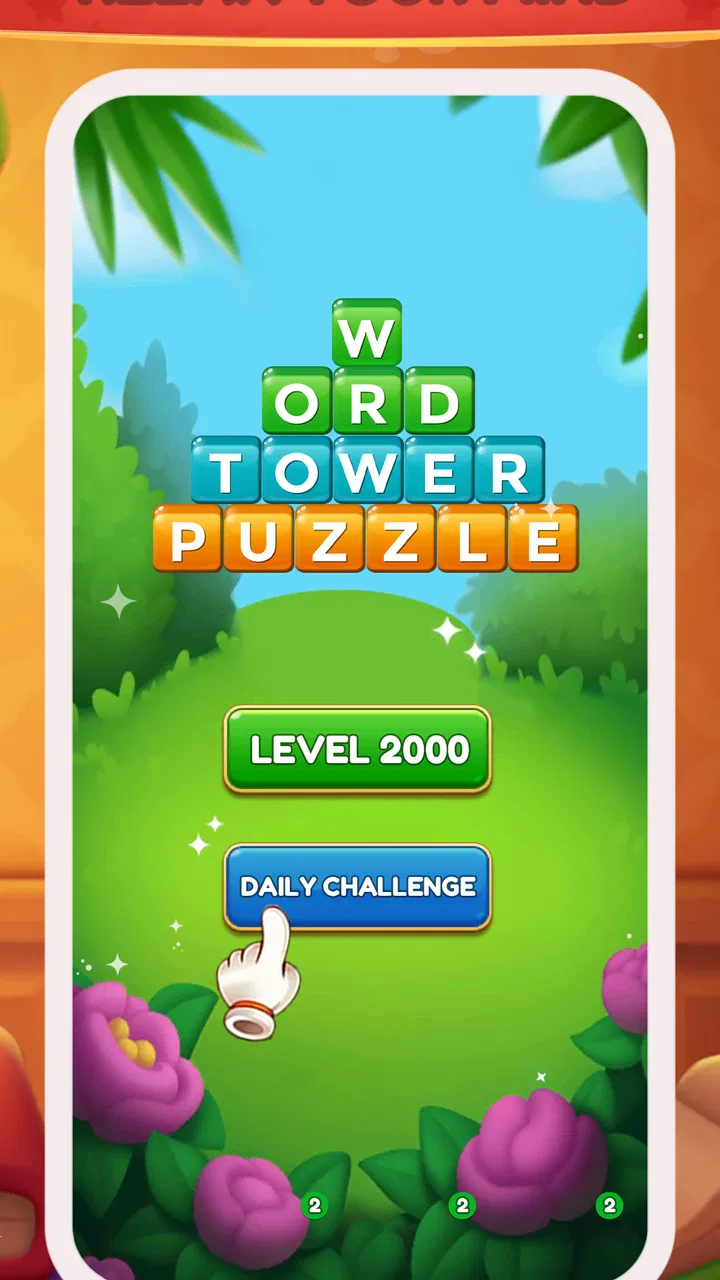
Word Tower - Premium Puzzle is a word game built around arranging or connecting letters to solve progressively challenging puzzles. Its tower-style progression gives the game a clear sense of advancement, while the premium presentation is designed for players who prefer a focused experience without the clutter often found in free puzzle apps. It is suitable for short sessions or longer word-solving play.
02Is Word Tower - Premium Puzzle free to download?
Word Tower - Premium Puzzle is presented as a premium puzzle game, so availability and pricing may differ between the Google Play Store and Apple App Store. In most cases, a premium listing means you may need to pay before downloading, rather than relying on frequent advertisements or energy systems. Check the store page for the current price, supported devices, and any regional differences.
03Does the game work offline?
Word Tower - Premium Puzzle is generally suited to offline play because its core experience consists of self-contained word puzzles rather than real-time multiplayer matches. However, an internet connection may still be required for the initial download, updates, license verification, or optional store-related features. If offline access is important to you, confirm the latest store description and test the game after installation.
04Is Word Tower - Premium Puzzle suitable for beginners?
Yes, the game can be approachable for beginners, especially for players who enjoy word searches, letter puzzles, and gradual difficulty increases. Early levels typically help you understand the basic mechanics before introducing more demanding combinations. Still, later stages may require a broad vocabulary, careful planning, and patience, so players looking for completely casual puzzles should expect the challenge to increase over time.
05Are there advertisements, in-app purchases, or intrusive interruptions?
Because Word Tower - Premium Puzzle is marketed as a premium title, players can generally expect a cleaner experience than in many free-to-play word games. The premium model may reduce or eliminate advertising and recurring purchase prompts, although the exact arrangement can vary by platform and version. Review the app-store listing before buying to confirm whether hints, expansions, or other optional purchases are included.
Pros
- Relaxing word puzzles suitable for short play sessions.
- Premium version offers a focused
- ad-free experience.
- Increasing difficulty keeps the challenge engaging.
- Simple controls make it easy to start playing quickly.
- Useful for practicing vocabulary and spelling skills.
Cons
- Some puzzles may feel repetitive after extended play.
- Advanced levels can be frustrating without hints.
- Limited appeal if you prefer fast-paced games.
- Vocabulary choices may occasionally feel unfamiliar.
- The premium price may not suit casual players.

Word Tower - Premium Puzzle
Gallery